Real Pain Points of Home Textile Factories — Solved One by One
Paper-Based Work Reporting
Workers fill out paper reports daily, clerks manually enter data — production data lags 24 hours. When the boss is away, the factory goes dark.
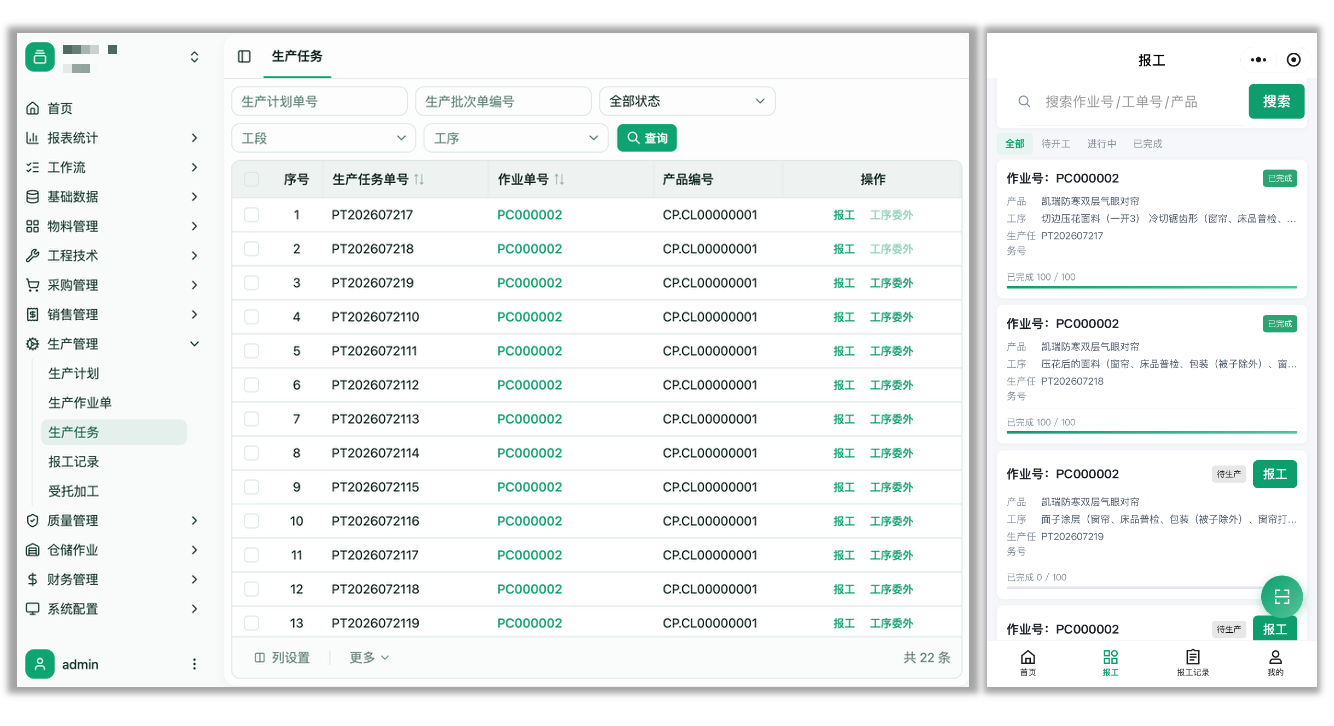
✓ WeChat Check-in Mini Program
Scan to report in 3 seconds, view real-time output on your phone, zero training cost
Audit Record Chaos
BSCI/Sedex auditors demand 12 months of attendance, training, and batch traceability records — digging through paper logs takes forever, and records often go missing.
✓ Audit Digitization Pack
Pull up all audit materials in 5 minutes — batch traceability reduced from 12 hours to 1 minute
Multi-SKU + Multi-Factory Coordination
Dozens of colors × multiple specs, chaotic material codes, frequent procurement errors; multi-factory scheduling via phone calls, inventory on Excel — the boss has no real control.
✓ SCM Supply Chain System
Unified materials, procurement, suppliers, and sales — one dashboard for multi-factory dispatch
Inventory & Batch Confusion
Fabric warehousing relies on handwritten cards, outbound on memory — stocktaking stops production for 2 days. Batch traceability for complaints takes forever.
✓ WMS+WCS Warehouse Management
Fabric RFID inbound, batch location management, scan-based in/out, FIFO
Experience-Based Rush Order Scheduling
Brand clients suddenly insert rush orders — schedulers adjust by gut feel, causing WIP pileups, delivery delays, and wasted capacity.
✓ AI Intelligence
Rush-order response cut from 4 hours to 15 minutes; capacity utilization up 20%+
Costing Is Hard to Pin Down
What does each order actually cost? How to allocate material, labor, and overhead? The boss quotes by gut feel — only finding out profit or loss after the order is done.
✓ Production Costing System
Auto-track material, labor, and overhead by order/color/process — view gross margin on your phone
Benchmark Case: Nantong Home Textile Group
Client Profile
A home textile manufacturer in Chuanjiang, Nantong — 3 factories (weaving, dyeing, sewing), 500+ employees, producing and exporting finished home textile products.
Project Goals
- Eliminate departmental data silos, standardize business processes
- Real-time inventory monitoring to prevent material surplus or shortage
- Data-driven decisions with dynamic reporting
- Supply chain collaboration to improve management
- Gradual paperless operations to reduce labor and office costs
Key Results
Cost Accounting
Full Batch Traceability
Equipment Utilization Up
Real-Time Data Sync
Key Pain Points Before Implementation
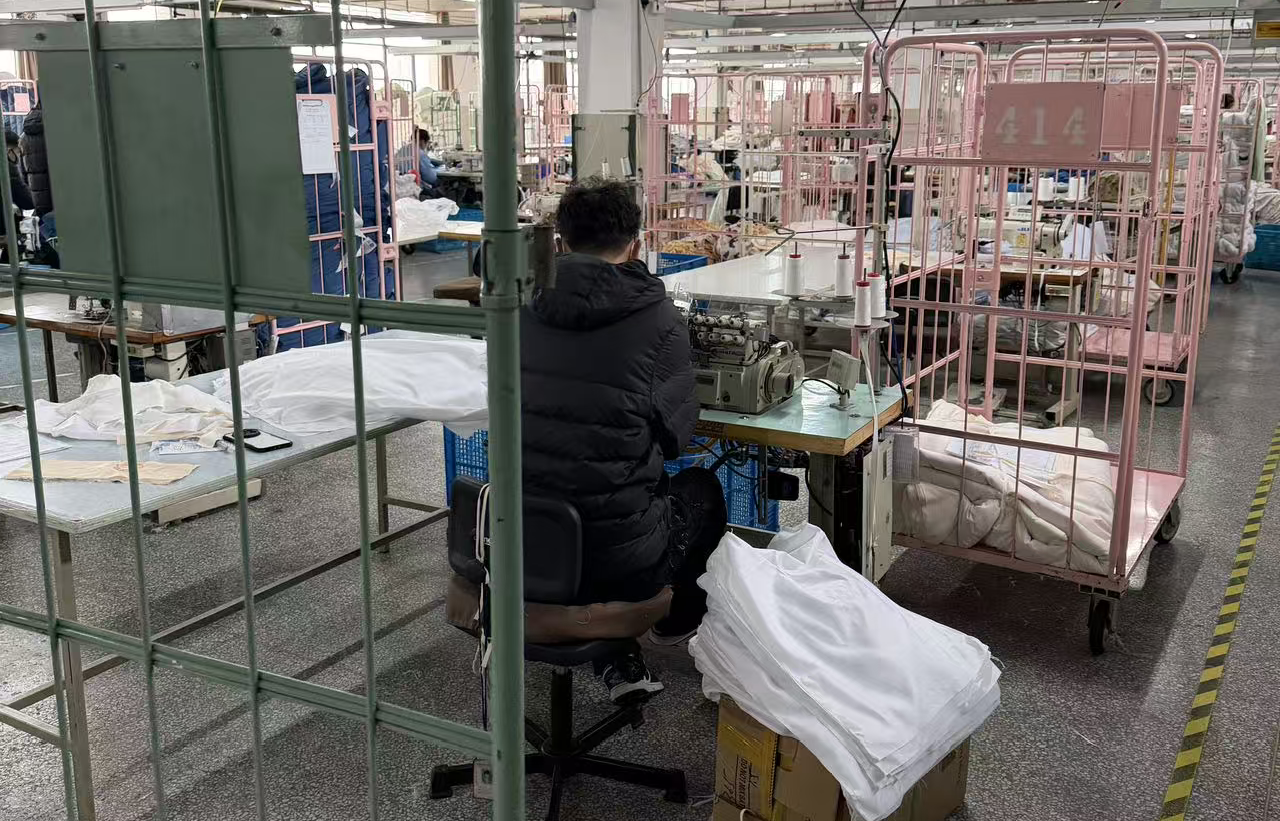
3 factories each managed by Excel — scheduling via phone calls, inventory reported through WeChat groups. HQ can"t see real-time data; chasing orders means calling each factory one by one.
Brand audits require full-chain traceability, but yarn inbound, material feeding, production, and outbound all rely on handwritten records — information gaps cause frequent audit failures.
Month-end finance allocates costs by total — no way to know real P&L per order. Worker reporting requires multiple clerks to tally.
One product with dozens of colors × multiple specs — material codes manually assigned, procurement frequently orders wrong specs, warehouse picking is inefficient.
Solution Architecture Design
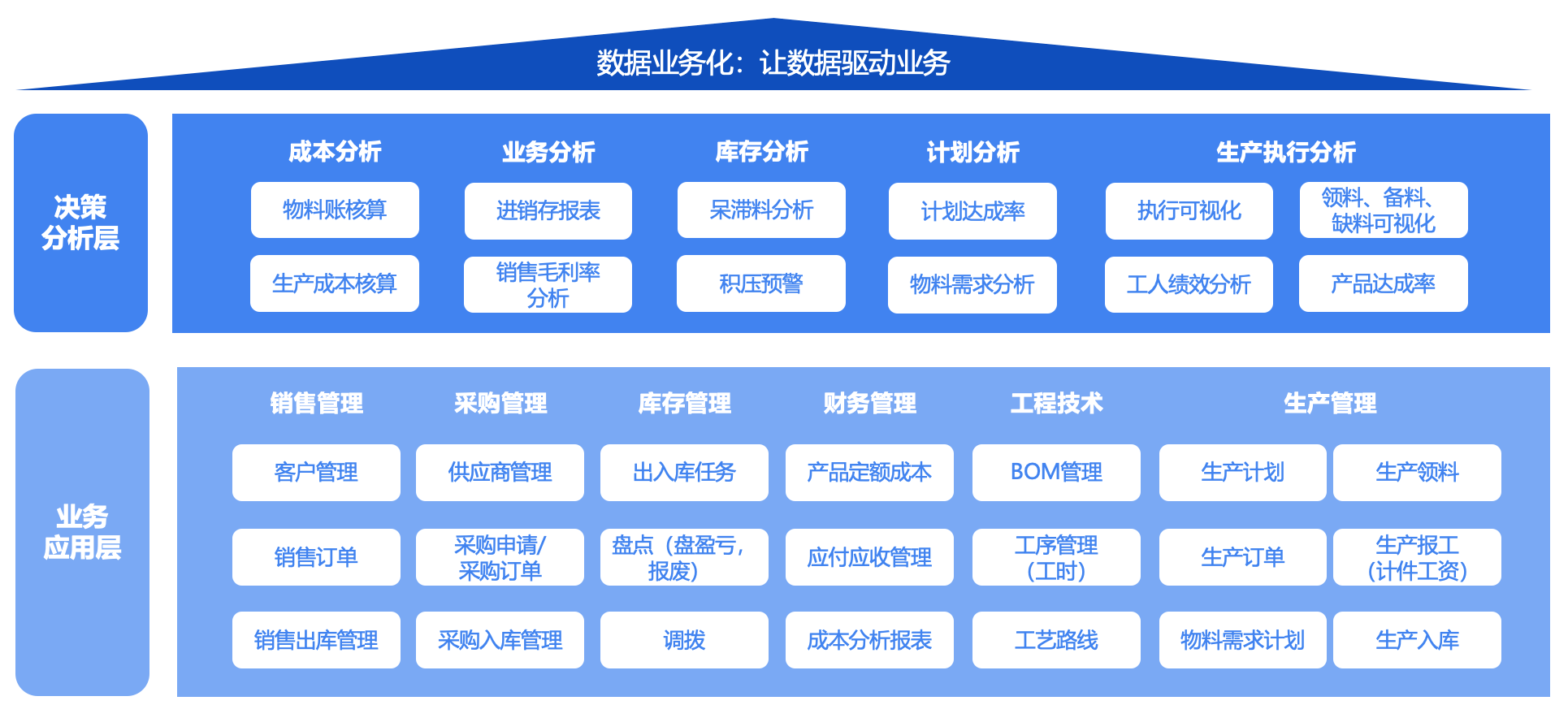
Solved via Supply Chain Collaboration Platform
3 factories synced in real-time to the group dashboard — scheduling, inventory, capacity, and quality unified. The boss sees every factory"s status on their phone.
Supplier inbound binds to dye vat number → scan-to-match batch at feeding → auto-record production → outbound linked to batch. Audit materials exported in one click, pass on first attempt.
Saved 3 reporting clerks. Auto-track material, labor, and overhead per work order — quote with confidence, catch losses early.
Unified material master data coding — procurement, warehousing, and production share one dataset. Procurement auto-calculates demand from BOM. Multi-SKU chaos eliminated.
Policy Support

MIIT [2025] Document No. 139
Textile Industry Digital Transformation Implementation Plan
Document Summary
- Set digital transformation goals for the textile industry, targeting significant improvements in digital R&D tools and key process CNC rates by 2027
- Support textile enterprises in building digital workshops and smart factories, promoting deep application of MES, ERP, WMS systems
- Encourage SMEs to adopt cloud and digital solutions, providing special funds and tax incentives for qualified digital transformation projects
- Promote digital upgrading of textile industry clusters, supporting Nantong, Shaoxing and other key clusters in building industrial internet platforms
Export Needs More Than On-Time Delivery — It Needs Compliance

From Carbon Data to Filing — End-to-End Compliance
ESPR/DPP Digital Product Passport · EUDR · PPWR Packaging Rules · Amazon CPF
Exporting home textiles to the EU takes more than manufacturing capability — you also have to meet green trade rules such as the Digital Product Passport (ESPR/DPP), EUDR and the Packaging Regulation (PPWR). Brand customers increasingly include carbon data in their factory audits.
Our strategic partner Carbbit delivers sustainable green trade compliance — from carbon accounting to filing and certification — and connects directly with Himool's batch traceability data.
Start Your Home Textile Digitalization Journey
Schedule a diagnosis and get a free home textile digitalization assessment report.